
Distributor vs Manufacturer: Which Option Is Right for Your Business?
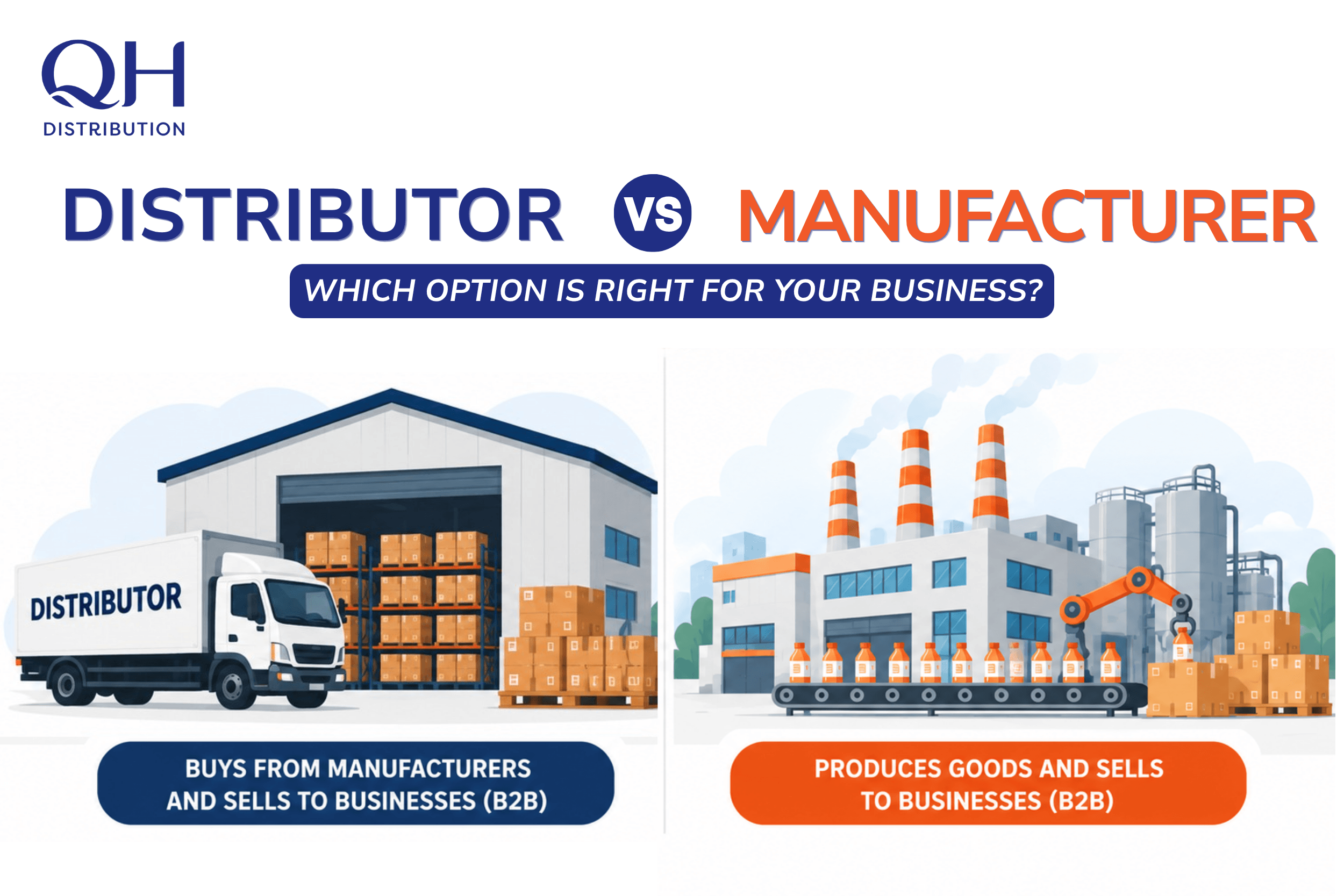
Choosing between a distributor vs manufacturer can affect how a business sources products, manages inventory, and plans purchasing costs. While manufacturers produce goods, distributors typically purchase products from manufacturers or other authorized supply channels and make them available to retailers, resellers, and other businesses. QH Distribution will explain how each works, their key differences, and when businesses may choose one over the other.
What Is a Manufacturer?
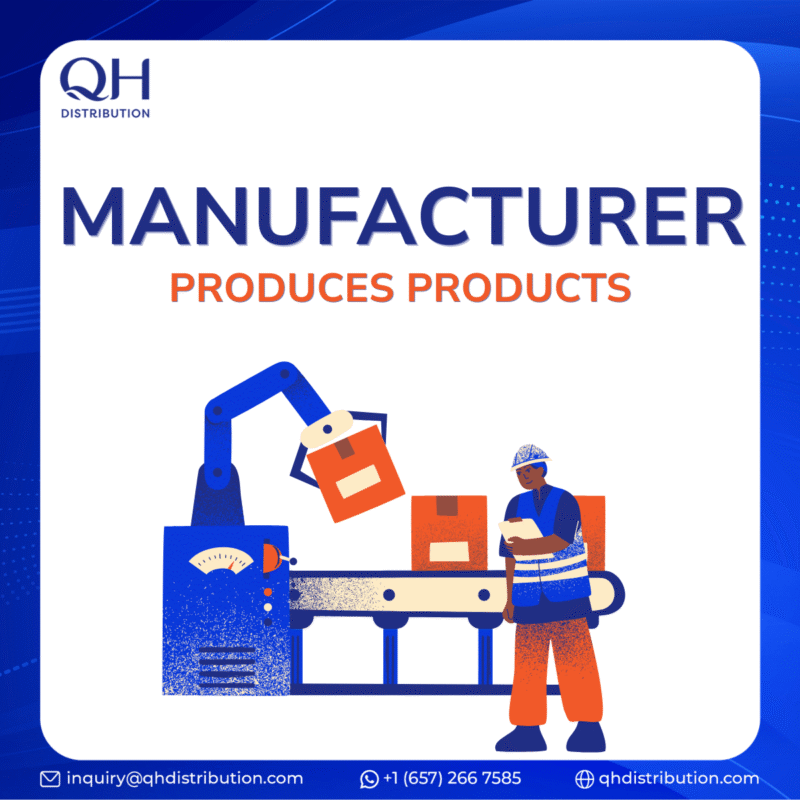
A manufacturer is a company that produces finished goods or components using raw materials, equipment, labor, and production processes. Depending on the industry, manufacturers may sell directly to businesses or work with distributors to bring their products to different markets.
For B2B buyers, purchasing directly from a manufacturer can be suitable when they need large quantities of a specific product or want to develop products under their own brand. However, direct purchasing may involve higher minimum order quantities, longer production lead times, and larger upfront commitments.
What Is a Distributor?
A distributor is a business that sources products and resells them to retailers, wholesalers, resellers, and other B2B buyers. Instead of manufacturing products, distributors focus on making existing products available to businesses through wholesale purchasing.
Many distributors carry products from multiple brands and categories. This allows buyers to source a broader assortment without opening separate accounts or placing individual orders with multiple manufacturers. Distributors may also support businesses with inventory availability, wholesale ordering, shipping coordination, and product selection.
Distributor vs Manufacturer Comparison
The main difference between a distributor vs manufacturer is their role in the supply chain. A manufacturer produces products, while a distributor sources and resells products to other businesses.
| Factor | Manufacturer | Distributor |
| Primary role | Produces products | Sources and resells products |
| Product selection | Usually focused on its own products or brands | May carry multiple brands and categories |
| Order quantity | Often better suited to larger orders | May offer more flexible order quantities |
| SKU variety | Usually limited to the manufacturer’s portfolio | Can provide a broader mix of SKUs |
| Pricing | Direct unit pricing may be lower at sufficient volume | Pricing includes the distributor’s role in sourcing and supply |
| Lead time | May depend on production schedules | Products may already be available in inventory |
| Purchasing process | Buyers may need separate relationships with different manufacturers | Multiple products or brands may be available through one supplier |
| Best suited for | Large-volume or specialized purchasing | Multi-brand sourcing and retail inventory |
These differences mean that the lowest unit price is not always the only factor businesses should consider. For example, buying directly from a manufacturer may provide competitive pricing for a large order, but the buyer may need to meet a higher MOQ. A distributor may offer greater flexibility when a retailer wants to purchase multiple products without committing large amounts of capital to one SKU.
Distributor vs Manufacturer: Advantages and When to Choose Each?
Neither sourcing model works for every business. The better fit depends on what the buyer needs to purchase, how much inventory it can manage, and how its supply chain is structured.
Advantages of Buying From a Manufacturer
- Potentially competitive pricing for high-volume orders
- Direct communication regarding production requirements
- Greater opportunities for product customization
- Direct access to production schedules and product specifications
When to Choose a Manufacturer
Working directly with a manufacturer may make sense when a business has predictable demand and can meet larger purchasing requirements. It may be suitable for:
- Large retailers purchasing significant volumes
- Businesses developing private-label products
- Companies requiring customized products or packaging
- Buyers purchasing a limited number of products in large quantities
- Businesses with the resources to manage larger inventory commitments
Before ordering, buyers should review production lead times, MOQ requirements, payment terms, shipping arrangements, and other applicable costs.
Advantages of Buying From a Distributor
- Access to multiple brands and product categories
- More flexibility when building a mixed product assortment
- Potentially lower order commitments than direct manufacturing
- Easier access to different SKUs
- Simplified purchasing through fewer supplier relationships
- Products may already be available for wholesale ordering
When to Choose a Distributor
A distributor may be more suitable for retailers and resellers that prioritize product variety and purchasing flexibility. This option can work well for:
- Beauty stores and boutiques carrying multiple brands
- E-commerce retailers testing new products
- Resellers purchasing several SKUs in one order
- Businesses that do not need manufacturer-level order volumes
- Retailers looking to simplify multi-brand sourcing
For these businesses, the value of a distributor is not limited to product pricing. Access to a wider assortment and a more centralized purchasing process can also influence inventory planning and operational efficiency.
Example of Distributor vs Manufacturer
Suppose a beauty manufacturer produces skincare products, including cleansers, serums, and moisturizers. The manufacturer may sell large quantities directly to major retailers or supply products through distributors serving different markets and business customers.
A distributor purchases or sources these finished products and makes them available to retailers and resellers. The distributor may also carry makeup, haircare, body care, and other beauty products from different brands.
A small beauty retailer may not need enough products from one manufacturer to justify a large direct order. Instead, it could work with a distributor to purchase smaller quantities across several brands and categories.
The supply chain could therefore look like this: Manufacturer → Distributor → Beauty Retailer → Consumer. However, distribution structures are not always identical. Some manufacturers sell directly to retailers, while others rely more heavily on distributors. Some businesses also use both sourcing models depending on the brand, order size, and product category.
Why Choose QH Distribution as Your Distributor?
QH Distribution is a U.S.-based wholesale distributor with more than 40 years of experience in the beauty industry. The company works with more than 290 beauty brands worldwide and serves retailers, beauty stores, salons, resellers, and other B2B buyers across multiple markets.
Through QH Distribution, businesses can source skincare, makeup, haircare, body care, and other beauty products through one wholesale partner. This multi-brand approach can help retailers reduce the need to manage separate sourcing relationships for every product category.
QH also supports buyers throughout the wholesale ordering process, including checking product availability, selecting SKUs, preparing quotations, and coordinating orders. Order quantities depend on applicable MOQ and brand requirements, allowing businesses to plan purchases according to their inventory needs.
The distributor vs manufacturer decision depends on how a business purchases and manages its inventory. Manufacturers can be suitable for high-volume orders, customized products, and direct production relationships, while distributors can provide greater access to multiple brands, categories, and SKUs through a more centralized sourcing process.
For retailers and resellers looking for a centralized approach to multi-brand beauty sourcing, QH Distribution provides access to a broad product selection through one B2B distributor.