
Wholesale vs Retail: Which Business Model Is Right for You?
Understanding wholesale vs retail can help business owners decide how to price products, manage inventory, reach customers, and structure their operations. Both models can be profitable, but they differ in how businesses generate revenue and manage day-to-day operations. In this blog, QH Distribution will show how wholesale and retail work, their key differences, and what to consider when choosing a business model.
What Is Wholesale?
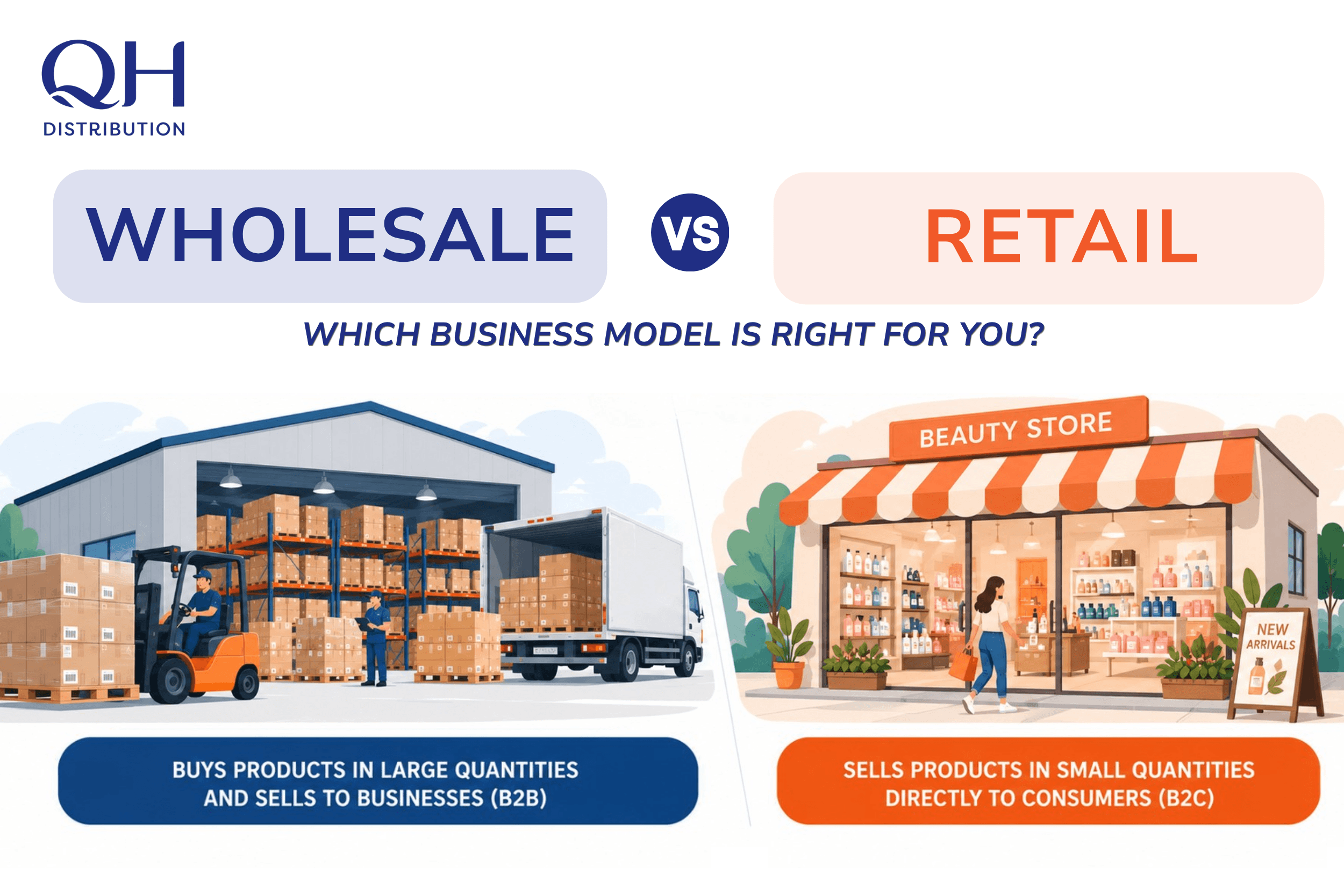
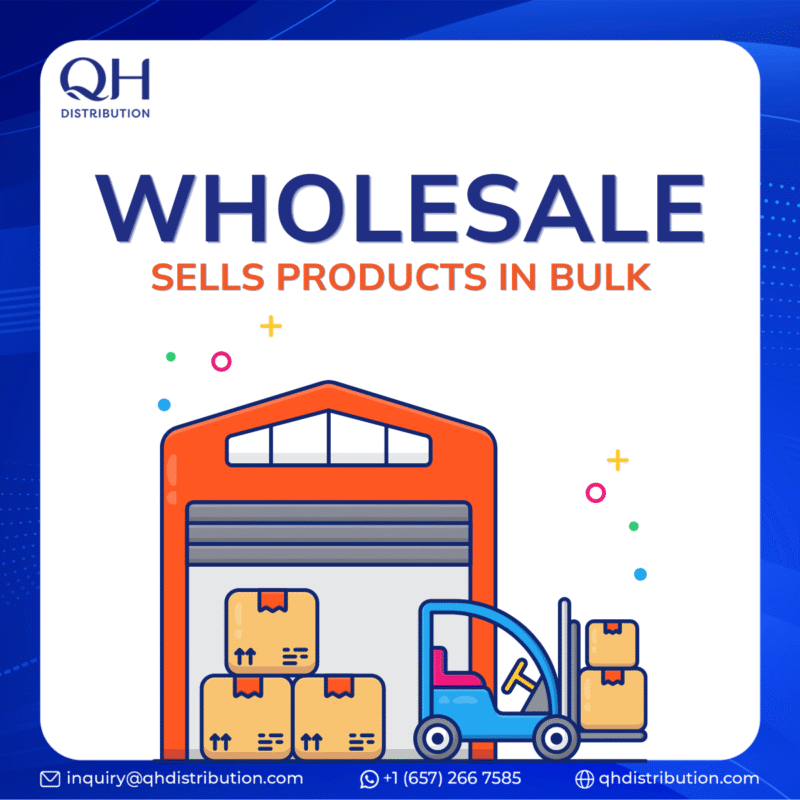
Wholesale is a business model in which products are sold in larger quantities, primarily to retailers, resellers, distributors, or other businesses. Wholesale buyers typically purchase products for resale rather than personal use.
A wholesaler may source products from manufacturers, distributors, or other supply channels and then sell them to B2B customers at wholesale prices.
For example, a beauty wholesaler may supply cases of skincare, makeup, or haircare products to beauty stores. The retailer then sells those products individually to consumers at a higher retail price.
How Does Wholesale Work?
Wholesale transactions usually involve three basic stages: Supplier → Wholesaler → Retailer
The products then reach the end consumer through the retailer. Instead of earning a larger margin on individual items, wholesalers generally depend on higher sales volumes. This makes order quantity, inventory turnover, B2B relationships, and efficient fulfillment important parts of the wholesale model.
Key Characteristics of Wholesale
- Larger order quantities
- Lower per-unit prices
- B2B customers
- Minimum order quantities or minimum order values
- Higher inventory volumes
- Repeat business purchasing
- Lower marketing costs per individual unit sold
What Is Retail?
Retail is the sale of products directly to the end consumer for personal use. Retail businesses can operate through physical stores, e-commerce websites, marketplaces, social commerce, or a combination of different sales channels.
A beauty retailer, for example, may purchase skincare products in wholesale quantities and then sell individual cleansers, moisturizers, or serums to customers.
How Does Retail Work?
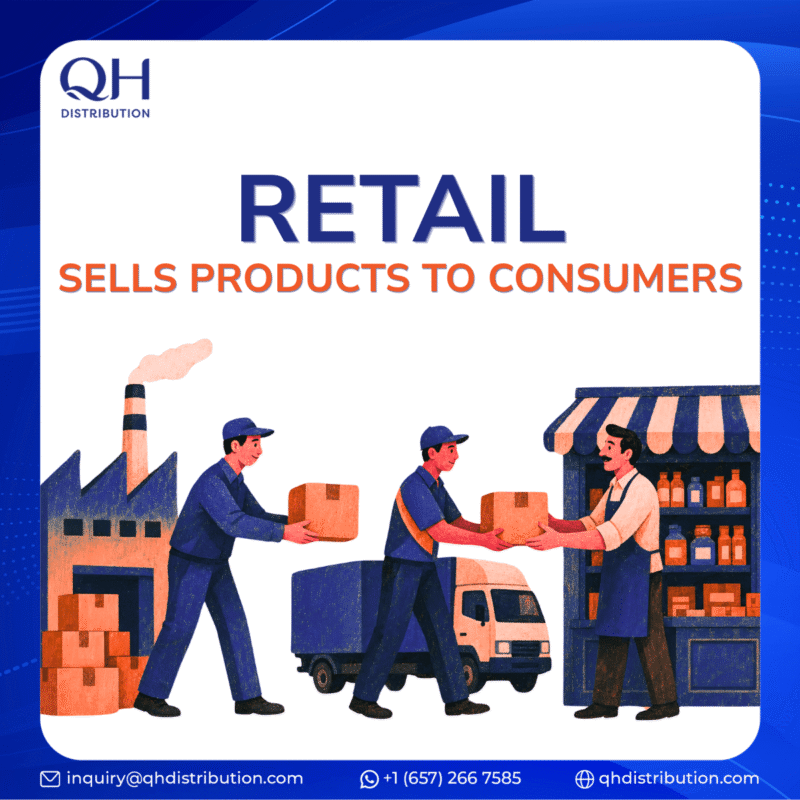
A typical retail transaction looks like: Supplier → Retailer → Consumer
The retailer purchases inventory at a wholesale or other B2B price and sells products individually at a retail price. Unlike wholesalers, retailers interact directly with consumers. As a result, product presentation, customer service, marketing, promotions, and the overall shopping experience can have a greater influence on sales.
Key Characteristics of Retail
- Smaller transaction quantities
- Higher per-unit selling prices
- Direct relationships with consumers
- More customer-facing marketing
- Product displays and merchandising
- Promotions and seasonal campaigns
- Greater focus on the shopping experience
Difference Between Wholesale vs Retail
The clearest difference between a wholesaler and a retailer is who they sell to. A wholesaler primarily sells to other businesses, while a retailer sells to the final consumer. However, the wholesale vs retail distinction also affects pricing, order size, margins, marketing, and inventory strategy.
| Factor | Wholesale | Retail |
| Main customer | Businesses and resellers | End consumers |
| Order size | Larger quantities | Individual units or small quantities |
| Unit price | Generally lower | Generally higher |
| Revenue model | Higher sales volume | Higher revenue per unit |
| Customer base | Smaller number of B2B accounts | Larger number of individual customers |
| Marketing focus | Business relationships and B2B sales | Consumer marketing and brand experience |
| Inventory | Larger quantities of products | Assortment based on consumer demand |
| Sales process | Quotations, accounts, bulk orders | In-store or online checkout |
| Product presentation | Less dependent on consumer-facing merchandising | Strong focus on displays, images, and presentation |
| Repeat business | Replenishment and recurring B2B orders | Repeat consumer purchases |
A Simple Beauty Industry Example Between Wholesale vs Retail
Consider a wholesaler supplying 100 units of Bioderma Sensibio H2O to a beauty retailer. The wholesaler sells the products in bulk at a wholesale price, earning revenue from a larger B2B transaction rather than individual consumer sales.
The retailer then sells those Bioderma products individually to customers at a retail price. While the selling price per unit is higher, the retailer also needs to cover expenses such as marketing, store or website operations, payment processing, and customer service.
This example shows how the same Bioderma product moves through two different business models. Wholesale focuses on selling larger quantities to business buyers, while retail focuses on selling individual units directly to consumers. The difference is therefore not only the selling price. Order size, customer type, operating costs, and the sales process also distinguish wholesale from retail.
Is Wholesale vs Retail Better for Your Business?
The right model depends on what your business sells, who your customers are, how much inventory you can manage, and how you want to generate revenue. Rather than asking which model is universally better, businesses should consider which structure fits their capabilities and target market.
Wholesale May Fit a Volume-Based Business
A wholesale model can make sense if your business has access to sufficient inventory and wants to sell primarily to other businesses. It may be suitable if you:
- Can manage larger inventory volumes
- Want to build relationships with retailers or resellers
- Prefer fewer but larger transactions
- Have the capacity to process bulk orders
- Can offer competitive B2B pricing
- Want to focus on recurring business accounts
Retail May Fit a Customer-Focused Business
Retail can be suitable for businesses that want to sell directly to consumers and have greater control over how products are marketed and presented. It may make sense if you:
- Want direct relationships with customers
- Prefer selling products individually
- Can invest in consumer marketing
- Understand the preferences of your target audience
- Want control over product presentation and promotions
- Can manage customer service and individual transactions
Some Businesses Use Both Models
Wholesale vs retail do not always have to be separate. Some businesses use a hybrid model by selling bulk quantities to B2B buyers while also operating their own retail channels. For example, a beauty company may supply products to stores while also selling directly to consumers through an e-commerce website.
A hybrid model can create multiple revenue channels, but it also requires careful management of pricing, inventory, customer relationships, and potential channel conflicts. Before choosing this approach, businesses should determine whether they have the resources to manage both B2B and B2C operations effectively.
Why Retailers Should Choose QH for Wholesale Supply?
Retail businesses depend on consistent sourcing to keep the products their customers want in stock. Working with a wholesale supplier can help retailers access multiple products and brands without managing separate sourcing relationships for every item.
QH Distribution is a U.S.-based beauty distributor with more than 40 years of industry experience. The company works with more than 290 beauty brands worldwide and supplies beauty stores, salons, resellers, and other B2B buyers across multiple markets.
QH offers products across skincare, makeup, haircare, body care, and other beauty categories. Retailers can use this selection to build a broader assortment through one wholesale source rather than purchasing each category separately.
The QH team can assist buyers with product availability, SKU selection, quotations, and order coordination. Purchasing requirements depend on the applicable MOQ and individual brand conditions.
The main distinction in wholesale vs retail comes down to who the business serves and how products are sold. Wholesale focuses primarily on larger B2B orders and sales volume, while retail focuses on individual consumers, higher per-unit selling prices, and the customer shopping experience.
For retailers looking to connect the wholesale and retail sides of their business, QH Distribution provides a centralized source for multi-brand beauty products.