
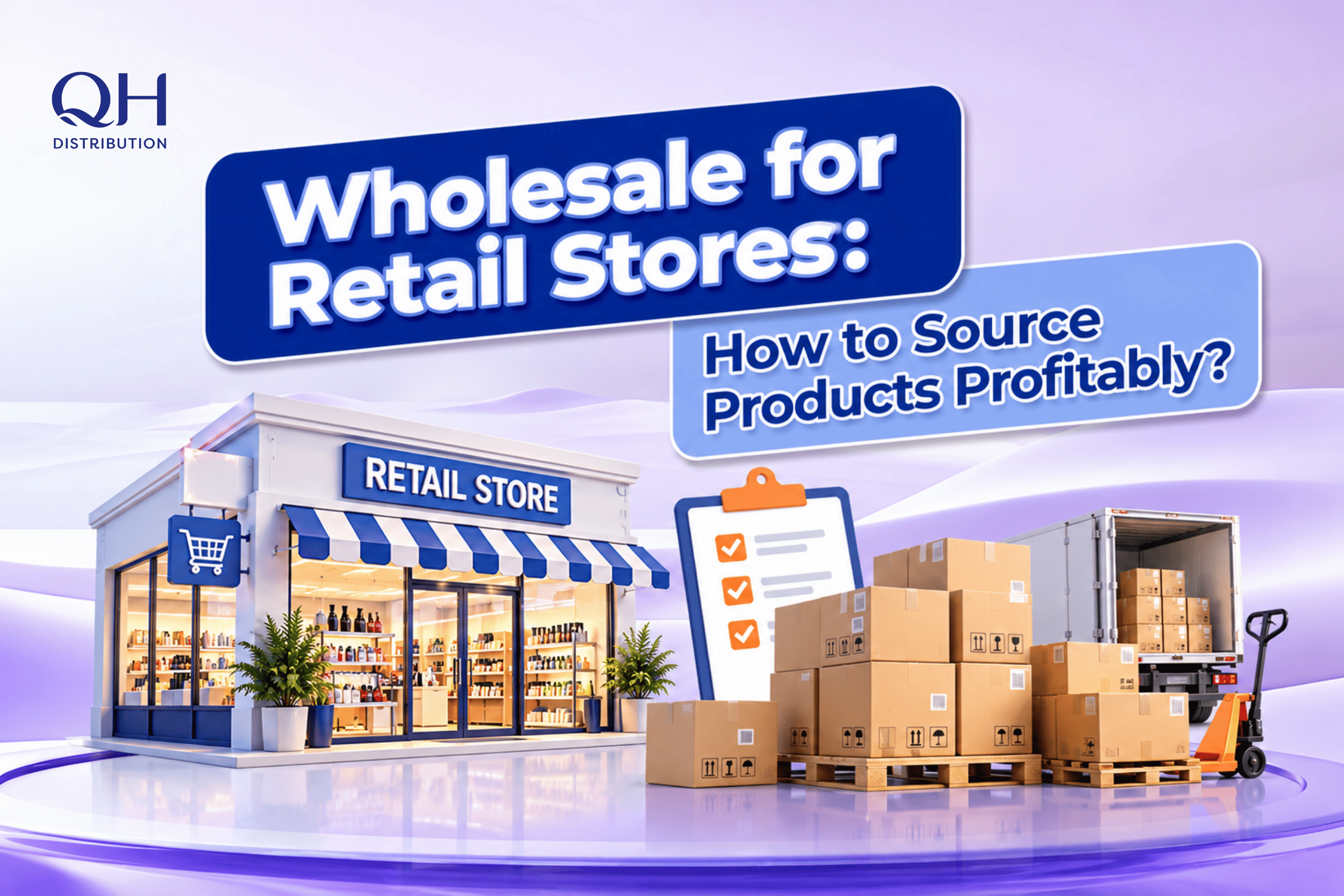
Wholesale for Retail Stores: How to Source Products Profitably?
For retailers, purchasing products at the right cost can directly affect inventory, pricing, and profit margins. Understanding wholesale for retail stores helps businesses make better decisions about what to buy, how much to order, and which suppliers fit their purchasing needs. In this guide, QH Distribution explains how retail stores buy wholesale products, where to find suppliers, and what to check before placing an order.
How Retail Stores Buy Wholesale Products
Retail stores typically purchase products from wholesalers, distributors, manufacturers, or other B2B suppliers and resell them to consumers at a higher retail price. The process starts with understanding what customers are likely to buy. Retailers can then search for suppliers, compare purchasing requirements, calculate expected costs, and determine an appropriate order quantity.
A typical wholesale purchasing process looks like this:
| Step | What Retailers Should Do |
| Identify demand | Review sales history, customer preferences, seasonal demand, and product trends |
| Find suppliers | Search for wholesalers, distributors, manufacturers, and other B2B sources |
| Compare products | Review brands, SKUs, product availability, and purchasing conditions |
| Check MOQ | Confirm whether minimum order requirements fit the store’s inventory needs |
| Calculate costs | Include product cost, shipping, duties, taxes, and other applicable expenses |
| Estimate margin | Compare total product cost with the expected retail selling price |
| Place & monitor orders | Order appropriate quantities and use sales performance to plan replenishment |
Where to Find Wholesale Suppliers
Retailers have several options when looking for wholesale products. Each sourcing channel offers different advantages depending on the type of products, order volume, and level of supplier support required.
| Sourcing Channel | Pros | Cons |
| Wholesale distributors | Access to multiple brands and categories; centralized purchasing; suitable for mixed-SKU orders | Pricing and MOQ may vary by brand; business verification may be required |
| Manufacturers | Direct access to the product source; suitable for high-volume orders; customization may be available | Higher MOQs may apply; product selection is usually limited to the manufacturer’s portfolio |
| B2B marketplaces | Broad supplier selection; convenient online comparison; useful for product discovery | Supplier standards can vary; additional verification may be necessary |
| Trade shows | Meet suppliers in person; see products directly; discover new brands | Travel and attendance costs; additional follow-up may be required |
| Industry referrals | Can introduce suppliers already used by other businesses | Limited selection; the recommended supplier may not fit your purchasing requirements |
Retailers do not necessarily need to use only one sourcing channel. For example, a beauty store may use a distributor for regular multi-brand inventory, buy selected high-volume products through another supply channel, and attend trade shows to discover new brands. Before choosing a supplier, compare product availability, MOQ, pricing, shipping, order terms, and communication rather than relying on one factor.
How Wholesale Pricing Works
Wholesale pricing generally allows businesses to purchase products for resale at a lower unit price than the final retail selling price. However, the difference between wholesale and retail prices should not automatically be treated as profit. Retailers still need to account for the costs of sourcing, storing, marketing, and selling the product.
Wholesale Price vs. Retail Price
Consider a retailer purchasing a skincare product at a wholesale price of $10 and selling it for $20.
| Cost Element | Example |
| Wholesale product price | $10.00 |
| Shipping per unit | $1.00 |
| Duties and applicable fees | $0.75 |
| Total landed cost | $11.75 |
| Retail selling price | $20.00 |
| Difference before other operating expenses | $8.25 |
The retailer does not automatically earn $10 because the product was purchased for $10 and sold for $20. Additional sourcing and operating expenses affect the actual margin.
Understand Volume Pricing
Some suppliers offer lower unit prices when buyers purchase larger quantities. For example:
| Order Quantity | Unit Price |
| 50 units | $10.00 |
| 100 units | $9.50 |
| 500 units | $8.75 |
A larger order can reduce the cost per unit, but the lowest unit price is not always the most profitable choice. If a retailer normally sells 100 units within a reasonable period, purchasing 500 units simply to save $0.75 per item could leave too much capital tied up in inventory.
Calculate Total Landed Cost
Before comparing expected margins, retailers should calculate the actual cost of getting products into inventory: Total Landed Cost = Product Cost + Shipping + Duties/Taxes + Insurance + Other Applicable Fees. This calculation gives retailers a more realistic basis for setting retail prices and evaluating whether a wholesale order makes financial sense.
Common Mistakes When Buying Wholesale
Wholesale purchasing can improve margins, but poor buying decisions can also create excess inventory and unnecessary costs. Retailers should watch for these common mistakes:
- Buying too much for a lower unit price: Volume discounts can be attractive, but ordering more than expected demand may tie up working capital and create slow-moving inventory.
- Focusing only on wholesale price: A low unit price does not represent the complete sourcing cost. Shipping, duties, taxes, storage, and other applicable fees should also be considered.
- Ordering trending products without testing demand: Viral and seasonal products can lose customer interest quickly. Testing a manageable quantity first can provide useful sales data before a larger purchase.
- Ignoring inventory turnover: A high-margin product is not necessarily profitable if it takes too long to sell. Retailers should consider both margin and how quickly inventory moves.
- Overlooking MOQ requirements: Minimum order quantities can require businesses to purchase more units than they realistically need. Retailers should check whether the MOQ fits their sales volume and available capital.
- Relying on a single supplier: Product shortages, pricing changes, or shipping disruptions can affect inventory availability. Maintaining alternative sourcing options for important categories can provide greater flexibility.
Why Retail Stores Choose QH Distribution
Retailers carrying multiple beauty categories need a supplier that can support both product variety and changing inventory requirements. QH Distribution provides a centralized sourcing option for beauty stores, salons, resellers, and other B2B buyers.
About QH Distribution
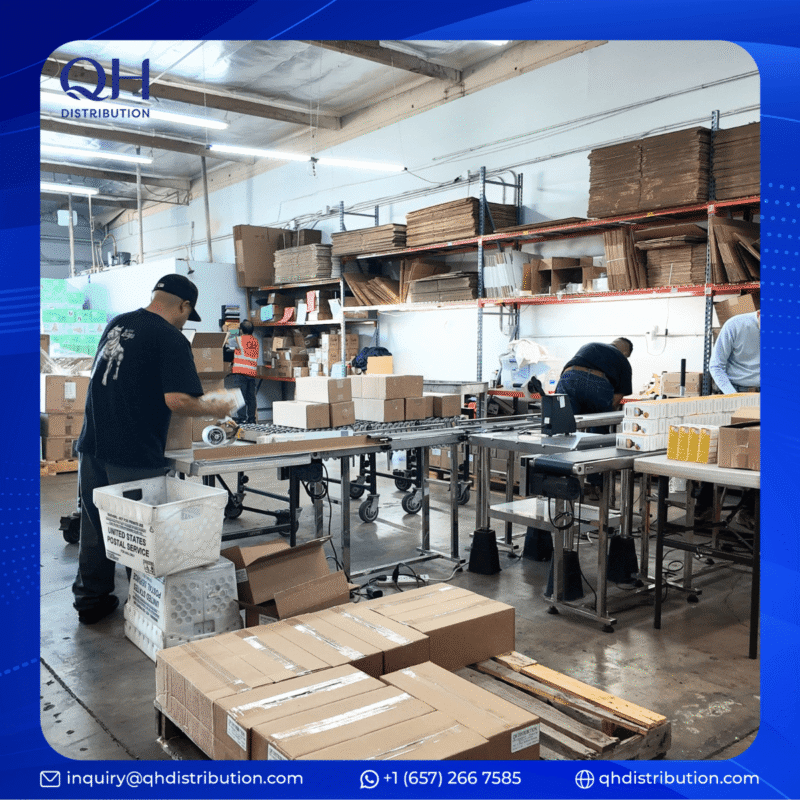
QH Distribution is a U.S.-based wholesale supplier with more than 40 years of experience in the beauty industry. The company serves over 300 businesses across multiple regions and works with more than 290 brands worldwide. This experience allows QH to support different types of beauty businesses, from smaller retailers building their product assortment to established buyers managing repeat wholesale orders.
Multiple Beauty Categories Through One Supplier
Retailers can source skincare, makeup, haircare, body care, and specialty beauty products through QH Distribution. Access to multiple categories can make it easier for stores to build a varied product assortment without managing a separate sourcing relationship for every product type.
Purchasing Support Based on Business Needs
QH Distribution supports retailers throughout the wholesale sourcing process, from identifying suitable products and brands to preparing quotations and coordinating orders. The team can also share product and market insights to help buyers make more informed purchasing decisions.
Successful wholesale for retail stores depends on balancing product costs with customer demand, margins, and inventory turnover. The lowest wholesale price is not always the best purchasing decision if it requires excessive inventory or comes with additional sourcing costs. For businesses looking for a centralized approach to wholesale for retail stores, QH Distribution can support multi-brand beauty sourcing from product selection through order coordination.