
Distributor vs Retailer: Key Differences & Supply Chain Guide
Choosing the right business partner is an important and difficult decision for any business. When it comes to distributor vs retailer, many businesses find it hard to decide which partner is the better choice for their long-term growth. If you are working in the cosmetics industry, it is especially challenging because there are many types of businesses you can work with.
Today, in this blog, QH Distribution will tell you the difference between these two types of businesses, give you a real example, and tell you which one is better for your business. Let’s dive in!
What Is A Distributor?
A distributor acts as a link between the manufacturer and other businesses. They purchase products in large quantities from manufacturers and authorized suppliers, then resell them to other businesses.
In the beauty and cosmetics industry, distributors usually work with many types of businesses, such as retail chains, drugstores, boutique stores, salon/spa and even other beauty wholesalers. They aim to build B2B long-term relationships.
What Is A Retailer?
A retailer is a business that sells products directly to end consumers. They usually buy goods from distributors, and sometimes from manufacturers directly, then sell to shoppers. Thanks to their activities and presence, end users can easily get the products they want to buy.
A retailer will concentrate on increasing their revenue and sales through B2C. Their main focus is helping customers find and buy products, improving the shopping experience, and building loyal customers.
Distributor vs Retailer: Key Differences
Now, if you are still confused about the definition of distributor and retailer, here are the 4 key differences for your review.
Target Customers
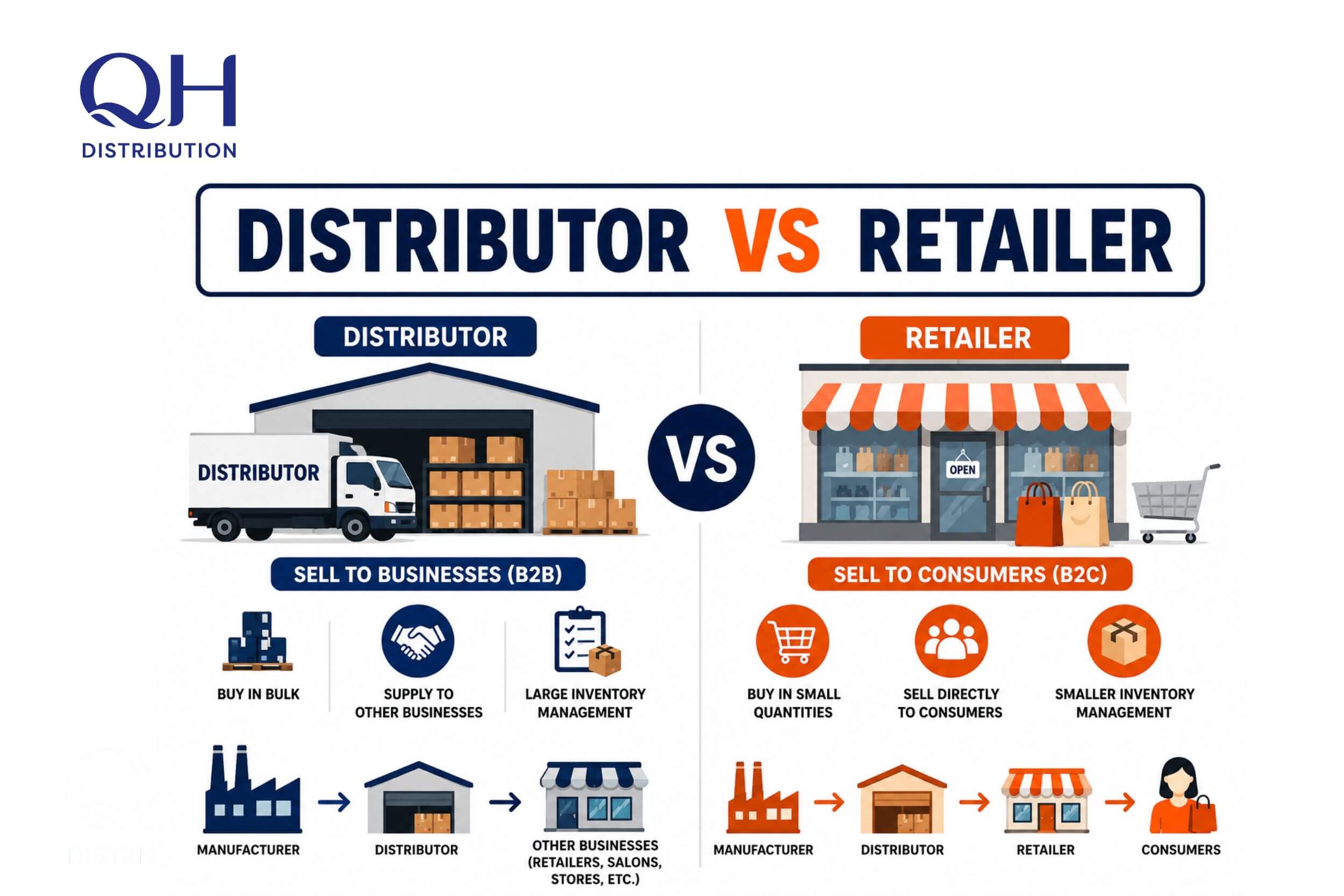
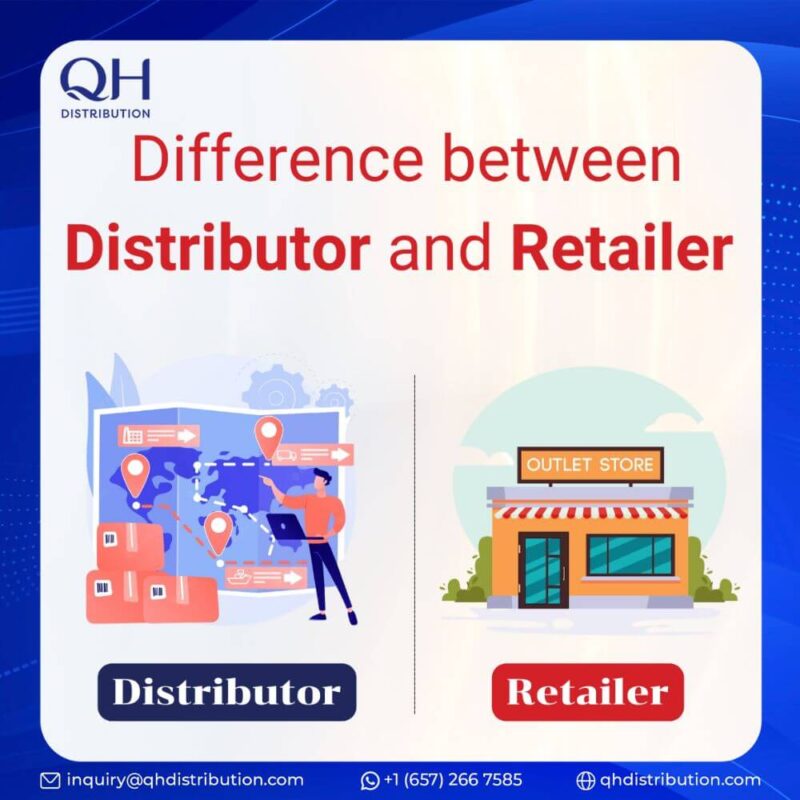
A distributor acts as a bridge between the manufacturers and other businesses, while a retailer is the middleman between a distributor and a customer. In other words, a distributor sells products to businesses, and a retailer sells products to consumers.
Sales Channels
A distributor does not need a store to sell products. They do their business by discussing with partners online or offline. They rarely need to showcase the products to their partners. On the other hand, a retailer usually needs a store to display the products so that the shoppers can come, see in person, touch, and buy products.
Nowadays, with the development of E-commerce, it is not necessary for retailers to have an offline store anymore. However, they still need to operate an online store with the same purpose of displaying their products to customers.
Purchasing Priorities
Distributors and retailers differ in their purchasing priorities. A distributor will buy in bulk to optimize logistics, operations, and inventory. A retailer, on the other hand, will buy a smaller quantity and wants to focus on their strategic in-store marketing and customer experience.
Inventory Management
Finally, what sets them apart is their need for inventory management. Distributors usually manage much larger inventories and therefore need inventory management systems to handle large volumes of products efficiently.
Retailers, on the other hand, generally manage smaller inventories. Therefore, they usually require less complex inventory management systems. Instead of keeping large amounts of stock, many small and medium-sized retailers place orders based on customer demand.
Real Examples Of Distributor & Retailer
Above are some key differences between a distributor and a retailer. Let’s take an example of a distributor and a retailer so you can understand these types of businesses more clearly.
Example Of Distributors
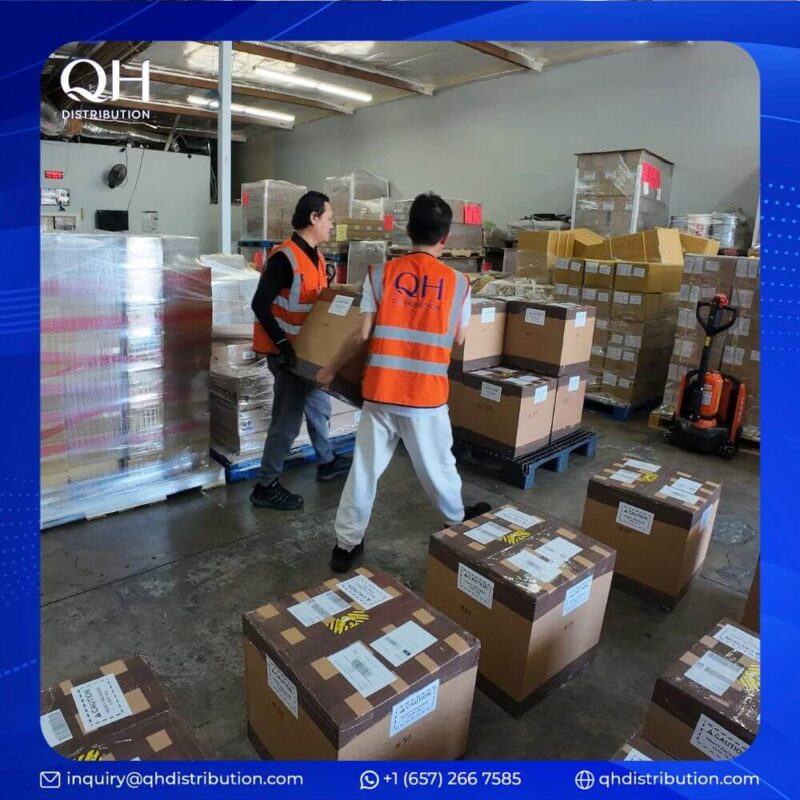
Regarding a distributor in the beauty and cosmetics industry, QH Distribution is a good example. They are a cosmetic wholesale distributor based in the US with more than 40 years of experience in this industry.
They have offered products from more than 290 trusted cosmetic brands at competitive wholesale pricing for their B2B customers. Besides, to build a long-term B2B relationship, they offer many dedicated services, such as customized packaging, a transparent order process, and a dedicated Sales team for each client. This ensures personalized support and a 24-hour response time.
Example Of Retailers
As an example of a retailer in a similar industry, we have SHEIN. It is one of the world’s largest online fashion and lifestyle retailers. It operates primarily through its e-commerce website and mobile app.
Customers can visit its website, access thousands of products online, compare prices, read reviews, view product photos and videos, and place orders directly through the platform. Of course, the shopping experience is its priority.
Distributor vs Retailer: Which Is Better For Your Business?
Now, you understand the differences between distributors and retailers. So, it’s time to find out the question today: “Distributor vs retailer: Which one is a better partner for your business?” There is no fixed answer for this question. It is really up to your business model and objectives.
When Buying From A Retailer Makes Sense
Retailers are primarily designed to sell products to consumers directly, not to other businesses. Therefore, they usually do not offer competitive wholesale pricing deals and other related services that your business needs.
For this reason, B2B buyers usually purchase products from retailers only in urgent situations or when they need a small order. Although some businesses can still place orders in bulk from retailers, it is not considered a smart choice.
Why Many Beauty Businesses Choose Distributors
Distributors, on the other hand, are designed to sell to B2B buyers. They buy a large quantity of products from many manufacturers, then sell them to other businesses. Instead of partnering with multiple retailers to stock a variety of products, your business only needs to work with a reliable distributor to source products from multiple brands. This not only saves time but also reduces operational effort.
Besides providing a variety of products in bulk, distributors give B2B buyers many related services to streamline the stocking process and ensure a consistent supply. In addition, distributors can offer B2B buyers more competitive wholesale pricing deals. This is the result of their partnership with manufacturers.
To sum up, you have to consider many factors before making the decision to partner with distributors or retailers. However, if you want to build a long-term relationship and have more competitive deals, distributors seem to be a better choice.
Why Businesses Choose QH Distribution As Their Distributor?
At QH Distribution, we help beauty businesses simplify sourcing, expand their product selection, and build long-term growth. With more than 40 years of industry experience and having served more than 320 customers worldwide, we understand the needs of every single type of beauty business.
We provide you with access to 290+ beauty brands, helping you widen your product portfolio. This attracts your customers’ interest and helps to increase your sales. Besides, businesses choose QH Distribution because we offer them a professional team that understands the beauty wholesale business, ready to provide you with support and expert advice whenever you need it.
Now, no matter which stage your business is in – expanding your product portfolio, entering a new market, or looking for a reliable distribution partner – QH Distribution is a reliable partner for you. We are committed to supporting your business growth.
Instead of spending too much time on building relationships with multiple companies, you’d better work with an experienced distributor that understands your business and helps you source products more efficiently.
Although both distributors and retailers play important roles in the beauty industry, they serve businesses with different purposes.
If your business wants to build direct relationships with stores, completely control pricing and promotions, partnering with retailers may be the best choice. However, if your priority is to grow faster and simplify operations, you’d better partner with a trusted distributor.
Remember, choosing the wrong partners can cost more than you think. It may cause delayed shipments, inconsistent inventory, higher purchasing costs, and missed sales opportunities. Before deciding to partner with any business, you should evaluate all the factors, like product pricing, availability, lead time, customer service, logistics support, and so on.
Now, when it comes to distributor vs retailer, the right choice depends on your business goals. Looking for a trusted beauty distributor with decades of experience, a diverse brand portfolio, and a strong global B2B network? QH Distribution is the partner you can trust. Follow our fan page and visit our website to learn more about the beauty and cosmetics industry.